
Tuesday, April 10, 2012
Dryer Vent Clogs

Thursday, November 3, 2011
Clean Filters Make Safe Stoves

Your stove's vent hood is there for every cooking adventure, but doesn't get much credit. Show your appreciation by keeping it in tip-top shape. Clean standard filters with a degreasing solution, followed by warm, soapy water, or put it on the top rack of your dishwasher. In units that use activated charcoal filters, replace those filters on a regular basis.
Saturday, August 20, 2011
Hemcrete®: Carbon Negative Hemp Walls


Monday, May 16, 2011
Cleaning Decks with Laundry Detergent

Tuesday, April 19, 2011
Swing Set Safety Tips

· Ensure the swing set is erected at least 6 feet away from any building or fences. Position the swing set in a shaded area, so that surfaces won't get too hot to the touch. Use sand or pea gravel, or a rubberized surface under the swing set, as these materials absorb the impact of a fall much better than dirt or grass. Make sure toddler swing sets are at least 2 feet above ground so kids can't use it on their own
Tuesday, March 15, 2011
Refrigerator Seal Dollar Bill Test

You can save cold hard cash on your utility bills by actually putting a dollar bill in your refrigerator. It's essential that your refrigerator door seal is tight. Leaky doors waste lots of energy over the course of the year. To test the door, close it over a dollar bill. If the bill pulls out easily, you may need to adjust the latch or replace the seal to save some cold hard cash.
Wednesday, March 9, 2011
Cold Water Cash

To save money while washing clothes, try using cold water instead of hot water. Improved detergents and modern technology mean you need a lot less hot water for your laundry, and instead can use cold water. Replace your old washing machine with a new energy efficient model and you can use cold water to save cold hard cash while washing your clothes.
Monday, March 7, 2011
Get Leg Up On Ladder Safety

This common household accident causes more that 150,000 emergency room visits each year and is one of the most common causes of falls. Worn or improperly used ladders cause hundreds of thousands of serious injuries each year. To stay safe, make sure your ladder has slip-resistant rungs and feet. Inspect it for cracked uprights, split rungs or loose rivets. When using an extension ladder, make sure the bottom is pulled away from the wall by at least one quarter of the height you need to work at (refer to the illustration above for proper setup) and never stand on the top rung of any type of ladder.
Monday, January 17, 2011
Tip for your next paint project...

Tuesday, January 11, 2011
Season for Fires…

Winter months most common for fires
January is the peak month for residential fires. When heating systems kick on, residential fires peak. Not so surprisingly, February and December follow close behind as peak months for residential fires, but keep in mind that fire safety is important all year long. If your furnace has not been inspected lately now is the time. Practice fire drills and check potential danger areas at least every 3 months, and always remember to test the batteries in your smoke detectors. Taking these precautions can drastically lower the risk of a residential fire occurring in your home.
Friday, December 3, 2010
Ceiling Fan For Winter Warmth

Are you using your ceiling fan in the winter months? There is a spin on why you should. During the winter, set your ceiling fan to turn clockwise to move rising warm air, down into your room. When the weather heats up, set the fan to turn counter-clockwise for a cooling breeze.
Tuesday, November 30, 2010
Dryer Safety

Plastic is great for most things around the house - but NOT when it comes to your dryer vent hose. Plastic exhaust hoses used by older dryers can collect lint and become a serious fire hazard. Check your dryer hose today - if it's white and plastic, replace it immediately with a flexible metal vent.
Monday, November 15, 2010
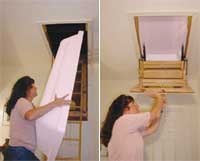
Insulate Your Attic Stairs
Prevent Leaks to Keep House Warm
Friday, October 29, 2010
Clearly Posted Home Address

If called for help, could the right people find your house? By placing large numbers on your home or mailbox, police and other emergency vehicles can locate your house quickly. If you have a long driveway or obscured entranceway, be sure your address is in plain view and well lit.
Monday, October 25, 2010
Pumpkins and Plumbing Don't Mix

Wednesday, October 20, 2010
Childproof Window Guards

Keep your children safe around windows in your home
Leaving windows open in warm weather lets air circulate while screens help keeps bugs out, but without childproof window guards this can pose a potential danger of a fatal fall. Modern screens are not strong enough to protect kids because today's window screens are not made of the tough aluminum used years ago; instead these window screens are fabricated from a much weaker vinyl that will not stop someone from falling out. Therefore, it is more important than ever to use childproof window guards that keep kids away from windows but are easy to open by an adult.
Don't Take Bath On Hot Water Bills

Are you taking a bath on your hot water bills? Here’s a tip to help you use less and spend less. Simply lower the temperature! With electric water heaters, drop the thermostat from the average setting of 140 degrees to just 110 degrees. With gas units, lower the temperature dial incrementally, and then use a thermometer to check the water temperature at the faucet nearest the heater itself until it reads 120. Doing this will provide plenty of hot water for showers, save energy costs and protect children from accidental scalding as well.
Tuesday, October 19, 2010
Water Heater Timers

By adding a water heater timer, you can lower your water heating costs. While using an electric water heater can be the most expensive way to produce hot water, adding a simple water heater timer will program your water heater so water is heated only when you need it -- like early in the morning. For the rest of the day, the water heater timer turns the water heater off and saves you lots of energy dollars in the process.
Monday, October 18, 2010
Programming Your Thermostat

In the summer, raise the temperature setting by 7 degrees when you're away and 4 degrees when you're asleep.
Save even more by using the Vacation and Hold features to manage temperatures while you're away from home for an extended period.
Lower the temperature setting by 8 degrees when you're away or asleep in the winter
Learn more at www.energystar.gov/programmablethermostats.
Great Burglar Deterrent


Dark homes invite burglars, but keeping lights on all the time gets expensive. The answer? Motion detectors. These lights surprise unwanted visitors by coming on when anyone gets within 50 feet of your house. It's a great deterrent for burglars and with most units you can select how long the lights stay on once tripped by the motions sensor.

Subscribe to:
Posts (Atom)